

The Church’s mission today: insights from Cardinal Marengo
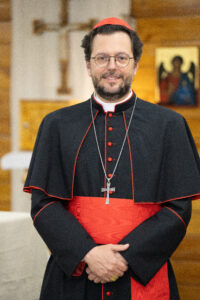 Cardinal Giorgio Marengo – Consolata Missionary and Apostolic Prefect of Ulaanbaatar in Mongolia – talks about how creating a specific and personal encounter with Christ must remain at the heart of the Church’s mission.
The importance of specific missions
In a recent interview with Fides News, Cardinal Marengo, who serves the youngest Church in the world, stressed how important personal and in-person missions still are, even in our digitally connected world.
The Cardinal explained that, while we are all called to spread our faith through our Baptism, there’s still a global need for missionaries who go to places where Christ isn’t well known. He shares:
‘In fact, I believe that, precisely in our time, it is worth recognising the specificity of the first proclamation of the Gospel; the Gospel that is proclaimed to those who do not know what it is.’
Missionaries who leave home to travel to far-flung places, and bring the Gospel to people who have never heard it, have a unique and essential role in the Church. Cardinal Marengo explains that the special nature of this calling cannot be watered down or confused with other, personal missions people might have within the Church.
Right now, the discussion of ‘mission’ in general terms is a hot topic within the Church, and it is an important discussion as each of us discerns what Christ is calling us to do. But, says the Cardinal, we need to remember the specific challenges of introducing Christianity to new cultures. Keeping this in mind, he says, is ‘vital’ for everything the Church does, now and in the future.
- Find out the difference missionaries are making in Mongolia right now>>
- Help support missionaries through our World Mission Sunday appeal>>
What makes mission work special?
Cardinal Marengo reminds us that helping people to meet Jesus is what mission work is all about. And for this to happen, the Church needs individuals who are ready to go and be among new people, in unfamiliar places, where there aren’t many Christians or where the Gospel is unknown. While technology and mass media have an important role to play in outreach, he stresses that as a rule, in order to share the love of Christ:
‘…contact with a human reality remains necessary. A human reality that facilitates and makes the encounter with Christ possible. Because this experience is always mediated by attraction and contact.’
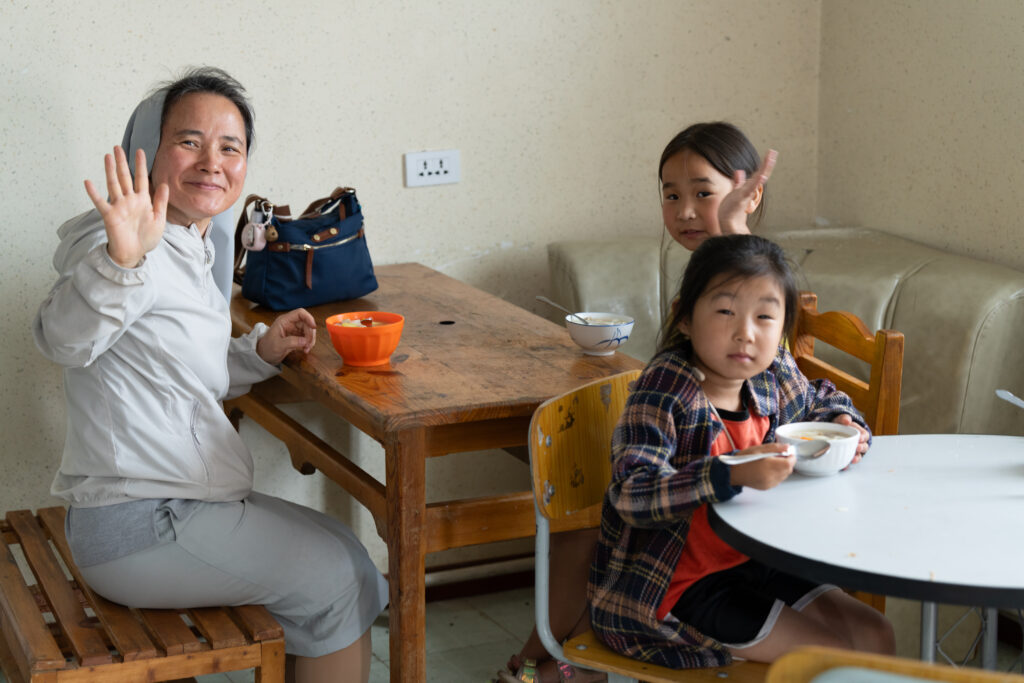
The Cardinal points out that it’s very different to live and work in a place with lots of churches and strong faith communities, compared with being a place like Mongolia:
‘It is one thing to live in places where the Church is established with all the charisms and ministries, and quite another to have a Church with only one local priest, as is the case with us in Mongolia… In different contexts and situations, the mission of the first proclamation is one that nevertheless makes the novelty of the Christian faith tangible, both when this happens in contexts that have not historically been confronted with the faith and when it is rediscovered as a novelty in places where it has shaped previous generations but has now somehow disappeared from the social horizon.’
The missionary toolkit
The Cardinal emphasises that says that good mission work takes time and patience, echoing the Holy Father’s point that mission must be a ‘tireless going out’ to meet and encounter our sisters and brothers.
If mission is to be successful, he argues, a slow, careful approach is better than trying to spread the message quickly, for example through marketing or social media. Instead, missionaries need to build strong foundations: learning local languages; understanding new and unfamiliar cultures, and ultimately building trust with the people they hope to serve.
He points out:
‘If Christ’s message were a mere message, a teaching of life, there would be no need to call men and women to go to the ends of the earth, as Jesus himself does in the Gospel.
‘Jesus became part of a particular people and a particular culture. Thirty years of hidden life, three years of explicit activity and three days of passion that lead to the resurrection. All those who follow him are called to let themselves be shaped by the Holy Spirit to live the same mystery. This is the mission.’
It takes patience and respect
Cardinal Marengo says missionaries must be careful not to push too hard. Rather they should let God’s spirit do the work; their role is to create the circumstances for an encounter with Christ, helping to make it easier for people to learn about Jesus if they want to, through nurturing a real and authentic trust:
‘Just think of the time spent learning difficult languages in order to immerse themselves deeply and respectfully in the cultures of the people with whom one lives. Everything presupposes understanding, friendly closeness, in order to build a relationship of trust. Much of the missionary effort is aimed precisely at identifying with the context and creating these conditions of mutual trust, in order to then share with others our treasure, what we hold dearest.’
Lessons from mission in Mongolia
Many people are currently interested in the young Church in Mongolia. The Cardinal likens it to the early days of Christianity described in the Bible:
‘The Apostles bore witness to the Lord Jesus in conditions of absolute minority compared to the social and cultural contexts in which they moved. Their work had connotations of marginality and novelty. In Mongolia too there was the experience of first contact with the Gospel by people and social realities that had never been confronted with it before.’
And he suggests that churches in places where Christianity existed once but where it has died out, could learn from Mongolia’s experience:
‘Those who are interested in our Church sometimes tell me that our experience as a poor and small Church can also bring inspiration to situations in post-Christian societies, where even a vague reference to Christianity can no longer be taken for granted, as it was in the past.’
Mission Month: An opportunity for encounter
Cardinal Marengo’s call for a revival of encounter echoes the Holy Father’s exhortation to ‘go and invite everyone to the banquet’ – and the ‘go’ is as important as the ‘invite’! Thank you for joining us throughout October (Mission Month) to support missionaries as they go out across the world, bringing light and hope to all of our sisters and brothers in need.